






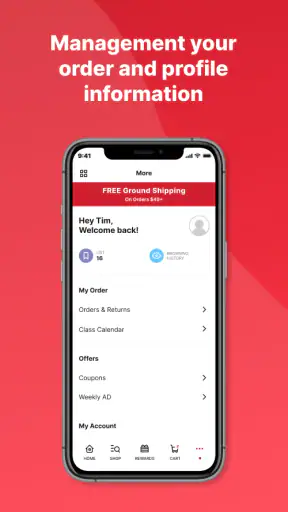
I found Michaels Stores most useful when I treated it as a planning companion for creative shopping rather than as a complete replacement for visiting a craft store. It brings Michaels’ arts-and-crafts world into a mobile format, with ideas and savings aimed at everyone from children and first-time makers to people who already have a well-stocked craft room. My overall view is positive, but qualified: the app can make a project easier to start and a store visit more purposeful, yet the experience is not always as smooth as I would want from a shopping app.
That distinction matters. If you want inspiration before making a birthday decoration, need help gathering supplies for a school project, or like checking Michaels offers before spending money, this free lifestyle app has a clear place on your phone. If you expect a flawless digital catalog, highly detailed project management, or a frictionless substitute for comparing specialist craft retailers, you may find it limited. I would recommend it most strongly to occasional shoppers and creative beginners who want practical help without committing to a separate planning system.
What the Michaels app is really good at
The strongest part of the experience is the connection between inspiration and a physical craft-shopping trip. Many creative projects begin vaguely: I might know that I want to make a seasonal centerpiece, decorate a gift, or find materials for a child’s activity, but not know which supplies belong on the list. Michaels Stores helps turn that vague intention into something more concrete by keeping ideas, store-related information, and savings in the same general experience.
I also like that the app is not aimed only at experienced crafters. The store summary speaks to kids, beginners, and experts, and that broad audience is believable in practice. A newcomer can use it to get a sense of what kind of project to attempt, while a regular maker can use it as a quick preparation step before heading out. It does not force every user into a specialist vocabulary or assume that everyone already knows the difference between materials.
For me, the most useful workflow is simple: decide what I want to make, browse for a direction, write down the materials I expect to need, and check the app again before shopping. That last step is important because craft purchases can expand quickly. A project that sounds inexpensive can become a basket full of extras once tools, decorative elements, adhesives, and replacement materials enter the picture. Using the app before leaving home encourages me to separate essential supplies from tempting additions.
The app works best as a bridge between an idea and an action. It is less impressive when I expect it to do all the creative thinking for me. The most satisfying results come when I already have a purpose, even a small one, and use the app to reduce uncertainty around that purpose.
Useful for real-life project planning
Consider a realistic weekend situation. I have a child’s school assignment due soon and want to avoid rushing through the store with no plan. I can use Michaels Stores to look for a suitable direction, note the broad types of materials involved, and decide whether the project is realistic for the time available. That preparation can prevent the common mistake of choosing something attractive but too complicated for the child’s age, available workspace, or patience.
The same approach works for a last-minute gift. Instead of wandering through craft aisles hoping an idea appears, I can begin with the recipient and the occasion, then use the app to narrow the shopping trip. Even when I still need to make the final creative decisions myself, the app can reduce the mental load at the starting point. That is a modest benefit, but it is exactly the kind of benefit that makes a lifestyle app worth keeping.
Another less obvious advantage is that it can help me avoid buying supplies in the wrong order. For projects involving several stages, I prefer to identify the base materials first and postpone decorative extras until I know the main structure will work. The app is useful in that workflow because it keeps my attention on the project rather than on isolated products that look appealing in the moment.
For experienced makers, the value is different. I would not use it as my only source of technical instruction for a demanding project, but I might use it to refresh my shopping plan, look for a new direction, or prepare for a seasonal change in projects. Its broad appeal means it can sit between beginner inspiration and routine supply planning, although advanced users will probably still rely on their own notes and specialist resources for precision.
Savings are helpful, but they change how I shop
The savings angle is one of the reasons to install the app, especially if I already shop at Michaels. Digital offers can be convenient because they keep promotions close to the shopping process instead of requiring me to remember a paper coupon or search separately. I appreciate that kind of convenience when I am already committed to buying supplies.
There is a trade-off, though. Savings can encourage unnecessary purchases just as easily as they can reduce the cost of necessary ones. My practical advice is to decide on a project budget before opening the offers section. I would then use a simple rule: an offer is useful only if it applies to something I already planned to buy. That approach protects the app’s best financial benefit without allowing discounts to dictate the project.
This is also where the app compares favorably with a general shopping browser but less favorably with a dedicated price-comparison habit. Michaels Stores is convenient when I have already chosen Michaels as my destination. It is not the right tool if my main goal is to compare every craft retailer, search broadly for the lowest possible price, or evaluate several brands independently. The convenience comes from staying within one retailer’s ecosystem, and that convenience naturally narrows the comparison.
Where the experience becomes less convincing
The average rating of 3.4 from around 70 thousand ratings suggests a mixed experience rather than universal satisfaction. I understand why. A retail app has to serve different purposes at once, and a user opening it for inspiration may judge it very differently from someone trying to complete a quick purchase-related task. When an app combines creative discovery with shopping utility, any weak point in either side affects the whole impression.
My main reservation is that the app can feel more useful before a project is defined than after the project becomes highly specific. Beginners benefit from broad guidance, but experienced users often want exact information quickly: a particular material, a precise color, a certain size, or a dependable route to the right store task. When that information is not immediately clear, the app can feel like an extra step rather than a shortcut.
I also would not mistake a mobile browsing experience for a full craft lesson. Inspiration is valuable, but a picture or project direction does not automatically explain technique, drying time, tool safety, material compatibility, or how to recover from mistakes. For a beginner, that means the app may help choose a project while still leaving important practical questions to answer elsewhere. I see this as a limitation of the app’s role, not a reason to dismiss it.
Parents should keep the same distinction in mind. The Everyone age rating makes the app broadly suitable from a content perspective, but the suitability of a particular craft activity still depends on supervision, tools, and materials. I would use the app with a child to choose an age-appropriate idea, then make the final decision based on the child’s abilities and the supplies involved. The rating does not remove the need for adult judgment during the activity itself.
Small habits that make it more useful
My first tip is to browse with a purpose instead of scrolling indefinitely. Before opening the app, I would choose one of three goals: find an idea, prepare a supply list, or check savings for a planned purchase. These goals produce very different browsing behavior. Without one, it is easy to collect attractive possibilities without completing anything.
My second tip is to use a two-pass shopping method. On the first pass, I identify the materials that make the project possible. On the second, I consider embellishments and optional upgrades. This is particularly helpful for beginners, because craft displays can make every accessory look essential. Separating the passes keeps the app’s creative side from overwhelming the practical side.
A third useful habit is to plan for substitutions before visiting the store. If a project depends on one exact item, I would decide in advance what kind of alternative could still work. That makes the shopping trip less fragile and reduces the chance of abandoning the project because one color, texture, or format is unavailable. The app can help me prepare the idea, but the final project should be flexible enough to survive real-world shopping.
Finally, I would check the app shortly before leaving rather than relying on an old plan. Retail information and personal plans can change, and a quick review helps me remove supplies I no longer need. This is a simple workflow, but it turns the app from passive inspiration into an active preparation tool.
Who should install it, and who should skip it?
I think Michaels Stores is a good fit for a casual Michaels shopper, a parent looking for manageable creative activities, a beginner who needs a starting point, or a maker who enjoys browsing ideas before buying supplies. It is especially useful if you prefer one retailer for inspiration and shopping and want savings to be part of that routine. The fact that it is free makes trying it low-risk, and its broad audience means I do not need advanced craft knowledge to get started.
The app is less suitable for someone who already has a precise, highly technical workflow and wants a specialized project notebook, detailed material database, or neutral marketplace comparison. I would also skip it if I rarely shop at Michaels and do not expect to use its store-focused value. In that case, a general notes app for lists or a specialist craft community for technique may serve the purpose better.
Its scale shows that it has reached a substantial audience: Michaels Stores has more than five million installs and about 24 thousand written reviews. Those figures do not guarantee that every part of the experience will suit me, but they do indicate that the app is established enough to be a familiar companion for many Michaels customers. I would still judge it by my own shopping habits rather than by popularity alone.
Device details and everyday practicality
The app comes from Michaels and is listed as free, with an Everyone content rating. It was released on October 6, 2011, so it is not a new experiment but a long-running mobile presence for the retailer. The current version is 26.8.2, and it supports devices running Android 7.0 or later. Those details make it accessible to many older Android users, although anyone using an especially old phone should still expect the experience to depend on the device’s general performance.
I would install it before a planned Michaels trip rather than wait until I am already standing in an aisle. That gives me time to explore calmly, decide what I actually want, and avoid treating the phone as a substitute for preparation. If I only want broad creative inspiration with no intention of shopping through Michaels, the app’s retailer connection may feel less valuable than a general idea platform. If I do shop there, however, that same connection is its clearest advantage.
One point I appreciate is that the app can serve different levels of commitment. I can use it for a tiny weekend activity without turning the hobby into a major project, or return to it when I am ready for a more involved creative plan. That flexibility is more useful to me than an app that assumes every user wants to become an expert.
My final view after using it
My verdict is that Michaels Stores is a practical, approachable lifestyle app with a clear purpose: help people move from creative interest to a Michaels shopping plan. It succeeds when I use it to organize an idea, prepare for a store visit, and apply savings to purchases I already intended to make. It is less convincing as a complete source of technical craft education or as an impartial way to compare the whole market.
I would recommend it to beginners, families, occasional makers, and regular Michaels customers who want inspiration and shopping convenience in one place. I would advise advanced crafters to treat it as a supplementary tool rather than their main workspace. The honest takeaway is simple: install it when Michaels is already part of your creative routine, not because every craft problem needs a dedicated app.
After weighing the convenience against the limitations, I see it as worthwhile for the right audience. It will not replace personal taste, practical judgment, or hands-on experimentation, and it should not pretend to. What it can do is make the first step less intimidating, the shopping trip more focused, and a creative idea easier to turn into something real.


